Sunday, July 29, 2007

Egg on egg with butter - Eggs benedict


Following a brief excursion into mayonnaise making the other week, it got me thinking about egg based sauces. For some reason or another, I had never tasted hollandaise sauce. This would have stemmed from the days when I had to make hollandaise on a regular basis at the pancake restaurant that I worked at - and although it always turned out fine for me - it had kind of put me off with the amount of butter it contained; not to mention the fact that by the end of the day it had turned into a split, coagulated mess.

In effect, hollandaise is a butter sauce brought together with an egg yolk and seasoned. Egg yolk, so I've learnt from Harold McGee himself, is a natural emulsifier and when combined with fat, starts to thicken. The reason that hollandaise is a warm sauce is simple - butter melts when hot.

The hollandaise I made yesterday morning, to adorn my poached egg and muffin, turned out airy and soft with just the right seasoning. Based on Olive's "How to make dead, good hollandaise" from the January issue, the only thing I had to change was the lemon juice, which I used lime juice instead. I am no longer disgusted by hollandaise, and when it's appropriate, I will be making it just like this.

Hollandaise

1 egg yolk
Pinch of salt
Dash of water
1 teaspoon white wine vinegar, or other flavoured white vinegar like tarragon
125g butter, melted
Half a juice of lime
Shake of paprika

Melt the butter over medium heat and try not mix the clear liquid with the white liquid. Whisk together the yolk, water, vinegar and salt in a heatproof bowl. Place the bowl over a pan of simmering water and when it starts to thicken start adding the clear butter liquids very slowly. Once all the butter is incorporated continue whisking until the sauce starts to thicken. If it thickens too much add a splash of water to loosen it up. Whisk in the lime juice and paprika.

Monday, July 02, 2007

For Johanna: Carrot Cake


My very favourit-ist carrot cake of all time. Made again, yesterday.

Johanna: you have to follow this to the tee. I've made slight variations - all to detrimental effect. In fact, the picture of the cake above didn't work out because I used all white flour and no nuts. Didn't turn out at all.

Carrot Cake

175g brown sugar
150mL sunflower oil
2 eggs
100g white flour
100g wholemeal/barley/rye flour (whichever you have on hand)
1 teaspoon baking powder
1 teaspoon mixed spice
3 medium sized carrots - peeled and grated (no doubt using your Thermomix *jealous*)
50g chopped nuts
1 orange, zested and juiced
Additional 75g brown sugar

Preheat oven to 180° Celsius. Beat together the brown sugar and oil. Add in the zest of the orange and the eggs, beating between each additional. Beat until lighter in colour and slightly foamy. Tip in the flours, baking powder and spice and mix until well combined. Fold through the carrot and mixed nuts. Transfer into two prepared sandwhich tins and bake for about 30-45 minutes until cooked (you know when ;).

While it is baking prepare an orange syrup by slowly heating the orange juice and additional brown sugar over a low heat. When the cakes are removed from the tins (after cooling slightly) poke holes all over them and pour over the syrup.

Orange Cream Cheese Frosting

50g softened butter
3 cups icing sugar (I know I'm terribly inconsistant with my measurements - try 500mL)
175g cream cheese
Juice from half an orange

Whip together all of the ingredients until light and fluffy. Frost the cake with a layer of the icing between the layers of cake.

Let me know how you get on!

P.S. I'll hopefully be moblogging from the Henley Regatta. See you there - hopefully the weather won't be bad...

P.P.S. We've decided not to go to Henley Regatta - We've got to start putting our heads down and start saving money for Le Grande Tour in November... Besides - we have a mower to buy :(

Tuesday, June 05, 2007

Elderflower cordial

All last summer I was eyeing off our neighbours elderflower bush trying to work up enough gumption to go and ask them if I could pick the elderflower heads. Last year however, my shyness got the better of me and before I knew it the flowers had turned into berries and the berries fell to the ground.

This year was going to be different and a couple of weeks ago I found myself eyeing off our new neighbour's elderflower tree. Thankfully though I didn't have to overcome my shyness. On Sunday, after weeding the carrots, chard and radishes I sneaked over to the allotment opposite ours and into the elderflower bush (protected by a whole lot of stinging nettles). There were so many I figured that they wouldn't miss a few. I gathered at least 30 elderflower heads and I brought them home dreaming of elderflower cordial and all the things I can do with it. I'm thinking elderflower cupcakes, elderflower charlottes, elderflower granita... the elderflower possibilities are endless. I might have to go and pick some more.

Elderflower Cordial

30 heads of elderflowers
2 litres of water
1 kilogram of sugar (I used half golden granulated and half demerara)
2 limes, peeled and sliced
1 orange, peeled and sliced
4 tablespoons cream of tartar

Into a large saucepan (I talking big), place the flowers, sugar and citrus fruits. Stir together and leave to sit for 2 hours. Add the cream of tartar (which prevents crystallisation). Boil the water and pour over the flowers. Cover and leave to sit for at least 24 hours (although I let ours sit for 48).

Filter through a J cloth into sterilised glass bottles or plastic bottles. If freezing in the plastic bottles leave some space for expansion.

As a flavouring for various dishes I'm going to reduce the cordial down for a more intense hit.

Saturday, June 02, 2007

Rocket & Spinach Pesto

Ideally the first harvest of our allotment would have adorned the top of a pizza, been thrown through a salad or stirred through a risotto. But I wasn't the only one with the same idea. When I went to harvest the rocket the other night, I had found that it had been absolutely ravaged by slugs and other hungry insects. I don't blame them personally because the rocket is absolutely spot on. Peppery and fresh. And anyway - I should've put the milk out sooner.

Rather than waste it I thought it was a good opportunity to make a batch of rocket pesto from the stems that were left over and the few leaves that had made it through the slug storm. I bulked it out a little with the spinach that we had. I'm freezing a bag for us to use on the odd occasion - slicing off a block to stir through winter stews or to add to a toasted panini. Another frozen bag will be for Sabrina and Tim, my allotment buddies, who are currently in Australia and may otherwise miss out on the dilapidated crop.

Rocket & Spinach Pesto

Take a handful of rocket and a handful of spinach with one clove of garlic, a tablespoon of extra virgin olive oil and 2 tablespoons of pine nuts and whiz it all together in a blender. Pulse and don't over blend to much. That's it. Bob's your Uncle.

NOTE - Notice that there's no parmesan here. It's actually because I forgot it. But the rocket spoke for itself because when I tasted it I mustn't've thought it needed anything. Might try it with next time...

Monday, May 28, 2007

An Indian meal to stay home for:

This post is not a rant about the state of curry restaurants in this Country. I will not mention how many times I have tried the same meal at different curry houses to find out that they all taste the same. And I refuse to enter into a debate about which city has the best curry. Instead - I'll just tell you how I make my curry at home - where it's worth the work, fresher than ever, and better than any curry I've ever eaten out.

With the knowledge of Madhur Jaffrey, the support of Jamie Oliver and the tuition of Padmaja I managed to knock up a pretty good meal. It's just amazing how fresh ingredients that are full of flavour can manage to turn a dish around.

This is how I did it:

Onion Bonjis

I don't call them bhajis, because, although they are bhajis as I (an uneducated Westerner) know it, bhajis are really more like Indian-style tempura vegetables. These onion cakes do have a proper Indian name but I can't for the life of me remember what the name is. So we've named them Bonjis!

4 onions, sliced
3/4 cup white flour
1 teaspoon turmeric
1/2 teaspoon paprika
1/2 teaspoon cumin powder
1 teaspoon salt
Pepper to taste
Sunflower oil for frying

This part can be done in advance:

Place the onions in a large bowl and measure all of the dry ingredients over them. Mix through with your hands and while doing so squeeze the onions so that they release their juices. The onion juice will combine with the flour to form a sticky batter around the onion slices. Heat the oil in a frying until sizzling. Drop handful sizes of batter into the oil to make small cakes. Fry on each side for about 5 minutes. Once complete remove to a paper towel or metal rack to drain.

Before serving:

Reheat the oil to sizzling. Re fry the cakes until golden brown and heated through - about 2 minutes each side. Leave to drain for another 2 minutes but then serve immediately with raita.

Easy Raita

1/2 cup natural yoghurt
Handful of chopped coriander
Juice of half a lime

Mix all ingredients together and refrigerate until ready to use.

Chicken Curry
inspired by Madhur Jaffrey's Chicken Tikka Masala and Jamie Oliver's fragrant rub

Sunflower oil
5 or so cardamom pods
Half a cinnamon stick (about 5 cm)
2 onions, finely chopped
1 knob of finely grated ginger
2 garlic cloves, crushed
4 teaspoons of Fragrant Rub
4 tablespoons natural yoghurt
3 medium tomatoes, finely chopped
1 tablespoon tomato paste
1 red chili pepper, finely chopped (to taste)
500 grams well looked after chicken, cubed
150ml water
Handful of coriander, finely chopped

Brown of the chicken in some sunflower oil. Remove from heat and set aside. Heat some oil in a fry pan until sizzling and very hot. Add the cardamom pods and cinnamon stick. Stir quickly then add the onions. Continue stirring until the onions begin to brown slightly. Add the ginger and garlic and stir for one minute. Mix the fragrant rub through. Next, stir through the yoghurt, a tablespoon at a time, until it is absorbed by the spices. Add the tomato, tomato puree and chili pepper and cook for a good minute or so while still stirring. Pour in the water, bring to a simmer and cover. Simmer gently with the heat on low for ten minutes. Season to taste. Return the heat to high and stir the chicken through coating with the sauce. When ready to serve, stir through the chopped coriander.

Fragrant Rub

1 tablespoon fennel seeds
1 tablespoon cumin seeds
1 tablespoon coriander seeds
2 teaspoons fenugreek seeds
2 teaspoons black peppercorns
1 clove
1/2 cinnamon stick
2 cardmom pods
salt and freshly ground black pepper

Toast all of the ingredients in a dry pack on a medium heat until fragrant. Tip into a food processor and ground until fine.

Sag Aloo or Cumin Potatoes with Spinach

450g unpeeled potatoes
3 tablespoons sunflower oil
1/2 teaspoon cumin seeds
1 knob of ginger, finely grated
1 teaspoon salt
1 teaspoon ground cumin
1/2 teaspoon cayenne pepper
2 tablespoons finely chopped coriander
1 handful of baby spinach leaves
Black pepper to taste

Cook the potatoes in boiling salted water until tender, then drain and leave to cool. Peel and cut them into 2 cm cubes. Heat the oil in a frying pan over a medium-high heat. When it is very hot fry off the cumin seeds for 10 seconds. Add in the potatoes, ginger salt, cumin, cayenne and pepper. Stir fry the potatoes for 10 minutes, roughing them up slightly to create crispy edges. At the very end, stir through the spinach leaves and coriander and serve immediately.

Cardamom Rice

Dan is a guru with rice. This is his rice. When it comes to rice, he looks after it every time.

250ml basmati rice
500ml water
5 cardamom pods to taste
Handful of coriander, coarsely chopped

Boil the water. When on a rolling boil, add the rice, bring it back to the boil, stir once then cover. Lower heat to medium-low, then leave for 12 minutes without removing lid. Remove from heat and leave to sit for another 12 minutes, again, without removing the lid. When ready to serve, take out the cardamom pods and split to remove the seeds. Stir the seeds through the rice while fluffing it up with a fork. Stir through the coriander and serve immediately! Enjoy!

Thursday, May 24, 2007

Individual Scape and Chard Pies

Of all the chard pies I've made over the year, I've never actually posted about them. I guess that's because for the most part it makes up one of our fall back meals - like spag bol, or stir fry. So to me it's not all that interesting although oh so yummy!

Since my acquisition of Scapes recently, I've been trying to think of ways to use them. One of the most popular scape recipes seems to be pesto which I hope to try out this weekend. But for the mean time, I decided to try it out as a replacement for garlic in the chard pie. The end result was an earthier, more delicate flavour to the mix - which is a welcome change to an otherwise mundane-ish meal (although I really, really like chard pie in general - it's just you get used to it, if you know what I mean). Below I've detailed the filling only - I've used a standard shortcrust pastry which I not ready to share with anyone just yet.

Scape & Chard Pie Filling

350g chard
250g ricotta
4 slices of thick bacon
3 tablespoons pine nuts
3 stems of scapes with bulbs

Wash the chard thoroughly and pat dry with paper towels. Chiffonade the chard by layering each leaf on top of the other and roll up like a cigar. Slice into 1 inch strips starting from the leafy end and working to the stem. Separate the stem from the leaves.

Roast the pine nuts until golden brown. Leave to cool. Chop the scapes into 5 millimetre slices. Chop the flower finely and keep separate from the stem. In a saucepan heat a touch of oil with the scape stem. Dice the bacon and brown in the pan with the scapes. Fry until crispy. Add the chard stems and cook for 2 minutes. Add the chard leaves and keep the mixture moving until the leaves are wilted. Add the chopped scape flower.

Transfer to a sieve and press out all the juices ensuring that it is as dry as possible, otherwise the pie may become soggy. Place the chard into a bowl and stir in the ricotta until well mixed through. Add the pine nuts and stir though. Season to taste.

Tuesday, May 15, 2007

Strawberry Vodka Meringue Cake

Dear Daydream delicious...,

Please accept my sincerest apologies for the length of time I've been away from you. I offer, in way of an excuse, the incompetancies of British Telecom, who went out of their way to cancel our broadband connection and not show up on no less than 2 occasions. I know I should have found another way to be with you, my dear one, but to be honest the offerings I had for posts would have paled in comparison and would not have been worthy.

Please accept this strawberry meringue cake laced with vodka (I know how you like vodka) as a gesture of good will. I made one for you, dear Daydream delicious..., and the other as a house warming gift to my new kitchen. I can't wait for you to meet! You will get along so well and really, really enjoy working together. So much so, I think we should all meet up at least once a week from here on in!

Looking forward to hearing from you,

Much love, Bonnie

Strawberry Vodka Meringue Cake

1 punnet of strawberries
125mL vodka (to taste)
3 tablespoons demarerra sugar
3 egg whites
1 cup of castor sugar
1 teaspoon vanilla
1 teaspoon cornflour
1 teaspoon white vinegar
50g ground almonds
Whipped cream

Hull the strawberries and slice in half. In a bowl mix the strawberries with the demarerra sugar and vodka. Cover and leave in the fridge.

Preheat oven to 160° Celsius. Prepare two 23cm cake tins by lining the base with grease proof paper and oiling the sides with sunflower or rapeseed oil. Whisk the egg whites until they begin to froth. Start to add the castor sugar, 1 tablespoon at a time. The egg whites should be forming stiff peaks by this time. With the last tablespoon of sugar add the cornflour. Fold in the vanilla and vinegar until combined. Finally, fold in the ground almonds.

Divide the meringue between both cake tins and bake for 45 minutes. Leave to cool for 10 minutes then remove onto a wire rack to cool completely. Assemble the cake by placing half of the strawberries on the bottom layer, cover with cream and place the remaining strawberries on the cream. Top with the other cake. Serve with the remaining syrup drizzled over the cake.

Monday, April 30, 2007

Marshmallows

Since British Telecom have not yet been able to restore our connection to the rest of the world I have to sneakily post this entry while on my lunch break at work. I wanted to get at least one more in before the end of April! Oh, how this year is slipping away...

These marshmallows that I made were so sweet they just about burnt our mouths! But considering that they are made purely with sugar, gelatine, vanilla and water - that's hardly suprising.

They were to be for my Easter post - and I did make them for Easter since it really reminded me of being young and making fluffy bunny mashmallows instead of colouring eggs. Bunnys are so much cuter than boring old eggs, no?

For the most part, the recipe is the Cooking for Engineers test recipe. On their site they do go into a load of detail which was really helpful but I did change a couple of things.

Firstly I used a balloon whisk. According to the testers they used the beater because the marshmallow would get stuck in the whisk. Now, personally, I don't have a problem with this. I know exactly what to do with the marshmallow that has been stuck in the whisk - and so does my tongue.

The testers also took the temperature to hard ball state but I wanted a soft and fluffy marshmallow so kept it to soft ball. This is also why I reduced the amount of gelatin to three sheets.

I then toasted the coconut and once the marshmallow had set rolled them in the coconut and some icing sugar and cornflour mix. Next time, coconut all the way!

Saturday, April 07, 2007

Bacon & egg with thyme & potato rosti


Never has savoury food been so appealing to me. For years and years I've had a sweet tooth and although I'm not about to denounce all sweet food, I must admit that its savoury ally has been ambushing me in an attempt to beat me down and win me over. And on the breakfast front it has worked.

Our lazy (or not so lazy) weekends usually begin with a large main meal size brunch and like today, we ended the day with a simple soup - fennel. Apart from a little light snacking during the day this pretty much does for us until the morrow.

When Dan flipped over the calendar to display April's offer, I yummed at first sight. I had to make this bacon & egg with thyme & potato rosti. A right fancy fry up.

Bacon & Egg with Thyme & Potato Rosti

6 good sized potatoes, like desiree
1/2 of a white onion
2 or 3 sprigs of thyme
Bacon
Eggs

Boil the unpeeled potatoes for 8 minutes. Remove from heat and allow to cool until comfortable to handle. Peel the potatoes then grate into a large bowl. Chop the onion and the thyme finely. Mix into the potato and season well. Melt some butter with some olive oil in a 23 centimetre frying pan. Place the potato in the fry pan and pat down. Cook on medium for 15 minutes. Flip and cook on the other side for another 15 minutes or until golden brown. While the second side is cooking, grill the bacon. In the last few minutes poach the eggs. Serve with fresh leaves of thyme and a grind of pepper.

Saturday, March 24, 2007

A lot of excitement...


My life is in the jet stream at the moment and thoughts come tumbling out of my head at a million miles an hour.

Among other things, my life has lately included the following:

  • Stepping onto the property ladder

We're about to fall heavily into debt - expecting to exchange later this week, we're soon going to own our own little spot on earth. And I cannot wait! Anything to get me out of the current horrible kitchen! Speaking of kitchens...

  • Optomen TV has asked me to create some video blogs

Soon to be shown on UKTV Food, a new show called Market Kitchen is going to be aired on a daily basis from the Borough Market. They're teaming up with a number of UK Food Bloggers to feature a segment called Food Tube. My submissions so far can be viewed at D.D.TV.

  • Cupcakes are coming out of my ears!

And I'm loving them! A friend of mine and myself have started a new little company called Daydream Cupcakes. Our first venture out will be at a local farmers' market in Impington on the 21st of April. I've also got a new blog up and running mostly detailing my recipe development but it will soon show ordering details and where they will be available... Hopefully (fingers crossed) on a regular basis.

  • Allotment anticipation

Another friend of mine, her husband and I have all gone in for an allotment together! Today we spent 3 hours turning and digging the soil. The dirt is excellent with few brambles and loads of busy worms. We're hoping to have the spuds in soon - once we've worked out how to chit them. I dream of eating fresh vegetables on the day of picking and relishing in the therapy of it all. Have I gone mad?

All this and more - a milestone birthday for Dan is about to be celebrated, a writing competition has been entered into, a review of a local fish & chip shop has been submitted to Olive magazine and work is going through a busy time.

And I'm still enjoying myself! Well, why wouldn't I? Life is fabulous and things are looking good. Now I'm off to bake a carrot cake to celebrate... ;)

Friday, March 09, 2007

Lady Grey & Vanilla Custard Tarts


Although custard was not a huge feature of my childhood, the moment I poured the hot milk into the whisked eggs for this recipe I was taken back in time. Perhaps to a time when I was 13 and had just had my wisdom teeth removed and all I ate was custard. Or perhaps to an extremely hot Christmas day where a hot pudding with custard was served that was just almost unbearable.

The vanilla recipe comes from a Donna Hay supplement that arrived with this month's Living etc. The little tarts stood out amongst the other very pretty recipes, but seemed more beautiful yet more simple at the time that I knew I would be making them soon.

Almost on a whim and really at the very last minute, I split the cream into two saucepans and broke a lady grey teabag into the cream and let both pots heat slowly. Now I certainly would never advise doing two custards at once. Time was not on my side and I had to work extremely quickly so that the custards would not heat too quickly nor cool down too fast.

These little bites were moorish and delightful. I would certainly make them again for an elegant afternoon tea. Indeed, the mouthful of lady grey custard was just as comforting as a mug of tea.

These daffodils are growing just outside our front door and are a sweet reminder that Spring is well into it's dawn.

Lady Grey Custard Tarts

3 sheets of filo pastry (big enough to cut 12 rounds from each)
50g of butter, melted
Caster sugar for sprinkling

1 1/2 cups single cream
1/2 vanilla bean, split
2 egg yolks
2 tablespoons caster sugar
1 tablespoons cornflour
2 tablespoons water
2 lady grey teabags

To make the custard, place the cream, vanilla bean and lady grey tea leaves (removed from the bag) in a small saucepan over medium heat until the cream is hot but not boiling. While it is heating, whisk the egg yolks and sugar in a bowl until thick and creamy. In a separate bowl, whisk the cornflour and water to combine.

When the cream is just under boiling point (I used Nigel's instructions), strain the custard through a fine cloth and sieve into a pouring jug. Extract as much liquid as possible. Slowly whisk the hot cream into the egg yolk, add the cornflour and return the custard to the saucepan that has been rinsed. Stir over low heat for 2 - 3 minutes or until the custard coats the back of a spoon. Cover and refrigerate.

I found that if the custard went too lumpy I had to whisk fast and hard to return it to a smooth consistency. The original also called for 3 egg yolks, but I think this was a bit excessive and unnecessary, so kept it down to two.

Preheat the oven to 180 degrees Celsius. Brush one pastry sheet with the butter and sprinkle with the sugar and top with another pastry sheet. Continue layering the pastry with the butter and sugar.

Use an 8 cm round cutter to cut out 12 circles from the pastry. Press the pastry into 12 x 25ml lightly greased mini muffin tins. Bake the cases for 5 - 6 minutes or until golden. Cool on a wire rack. To serve, spoon the custard into the cases. Makes 12.

Saturday, February 24, 2007

Crepe Cake with creme anglaise


I am quite adept a cooking crepes. I should be. For about a year, I spent 3 hours a day for 3 - 4 days a week cooking up 10 litres of crepe batter for the pancake restaurant I was working in. The music would be turned up loud and I would go into the zone like a machine. I usually had 4 - 5 burners going at a time and I got the technique down pat. I'm sure if anybody did it for this long, they would be quite adept as well.

I saw this crepe cake a few months ago and it has been in my memory, sweet-talking to me ever since. Last week, with Pancake Day looming, I googled crepe cake and found this post in which a crepe cake is eaten. That particular cake was made with pastry cream.

With my fascination with egg based sauces still invading every waking thought, I felt this was more appropriate. So today, I sat down to figure my plan of action.

The first step was to decide what sort of cream to use. According to the gospel, it is worth defining the difference between a pastry cream, a creme anglaise and a custard.

A pastry cream is "meant to stay put in a dish and hold (it's) shape. (It is) therefore stiffened with a substantial dose of flour or cornstarch..."

A creme anglaise is a "pourable cream" and should only be as thick as double cream when cooled to room temperature.

A custard is "...a dish (that is) prepared and served in the same container, often baked and therefore unstirred, so that it sets into a solid gel."

By definition, the custard ruled itself out. The cake in the 'inspiration post' said that pastry cream was used for the layers, but I'm not a particular fan of pastry cream and besides, I did really want to prepare the creme anglaise.

The result was light yet very filling and not overly sweet. It went well for our afternoon snack with a cup of coffee. Dan was particularly impressed. Next time I think I would be inclined to add a layer of lemon curd or other equally tart jam to add an extra element to cake. Unfortunately, it did take a good 3 hours to prepare, so I think it's going to be stuck with a 'for special occasions' label.

Crepes

Makes approximately 22 crepes - each 26cm in diameter

400g sifted flour
8 eggs
Pinch of salt
1 litre milk

Add the eggs to the flour with 2 or 3 tablespoons of the milk. Beat together until incorporated. Add in the rest of the milk and beat until the consistency of double cream. Leave to stand for at least one hour. Pour the batter into a jug through a sieve to ensure that no lumps remain. Heat a 23cm nonstick frying pan to medium high.

When heated, pour in a generous amount of the batter and swirl it to cover the base of the frying pan. Pour out any excess batter back into the jug. When the edges start to crinkle and dry out, try to loosen the pancake with a spatula. When reasonably loose and cooked, flip. When the cake is cook, it will not stick to the fry pan. Place the crêpe on an upside down plate covered in a paper towel. Repeat as above until no batter remains. Patience is a virtue! And eat the first one because it's never any good.

Creme Anglaise
by Nigel Slater

2 eggs
2 egg yolks
400mls milk
200mls single cream
6 tablespoons of caster sugar
1 vanilla pod

While the crepe batter is standing, walk to the co-op and grab some milk, cream, bananas, apples and icing sugar. Measure the milk and cream into a heavy saucepan and heat on a medium high heat with the vanilla pod split lengthwise. Bring to boiling point. Nigel reckons that you will know boiling point right when the milk starts to quiver and tiny little bubbles start to appear on the edges - do not boil! While the milk is heating, beat together the eggs and sugar until light and airy. Through a sieve, strain in 2 or 3 tablespoons of the milk and stir through the eggs. Pour the remaining milk into the eggs - again, through the sieve. Stir through thoroughly. Rinse out the saucepan and pour the creme anglaise back into it and return to a low heat. Scrape the seeds from the vanilla pod and add to the creme anglaise. Stir for 5 or 6 minutes until the creme anglaise starts to thicken. Remove from heat and pour into a heatproof bowl. Stir every now and again until ready to use.

To assemble:

Place one crepe onto a flat plate no defined rim. Spoon 1 to 2 tablespoons of the custard and spread over the bottom crepe. Place another crepe onto the creme anglaise and again, spoon 1 to 2 tablespoons of the creme anglaise on top. Continue layering until everything has run out, finally finishing with a crepe on top. Sprinkle over a bit of Demerera sugar over the cake and either caramelise the sugar with a blow torch or under a very hot grill.

Saturday, February 17, 2007

Mayonnaise for a good BLT


I remade mayonnaise today. The formation of mayonnaise is really interesting to watch and ever since I had so much fun making it the first batch, I couldn't wait for a good enough excuse to do it again. And what better excuse than a BLT for lunch?

I wanted to use our very special olive oil called Adamo which we discovered at the market and can now source from a website. I wanted to see how the oil effects the flavour of the mayonnaise. For the basis of the recipe, I started from Heston Bluementhal's basic mayonnaise recipe found in his Family Food cookbook.

The choice of mixing bowl, as Heston describes, is critical. I made the mistake of starting in my glass bowl but had to start over when after 50 millilitres of oil, I realised that it wasn't thickening. A round bottom bowl should be used, but it is important to be more convex than not. I had a plastic IKEA one on hand that was perfect last time round and worked just as well this time.

A number of different types of 'loosener liquids' can be used; water, vinegar of any sort, lime or lemon juice. To match the almond and pepper of tones of the extra virgin olive oil, I used a lime, although lemon would be fine. I would use vinegar if I wasn't looking for a flavourful outcome.

As an extra note, for any of our bacon dishes we always use Duchy Original Back Bacon. Not only do part of the proceeds go to charity, it is the best flavoured, most readily available bacon that we can find.

Mayonnaise

1 egg yolk
Pinch of salt
1/4 teaspoon of mustard powder
100 millilitres of extra virgin olive oil
75 millilitres of sunflower oil
25 millilitres of mild cooking olive oil
Juice from 1/2 a lime
Dash of cayenne pepper

Using a medium sized handheld whisk, whisk together gently the egg yolk, salt and mustard. When the egg yolk is activated - smooth and slightly lighter in colour, gradually add a dribble of the extra virgin olive oil while still whisking. If the bowl is not stable, place a tea towel underneath it. When the dribble is incorporated and the yolk is starting to thicken, continue gradually pouring in the olive oil. If unsure, add less than more to begin with and watch it really start to thicken. If it becomes too thick or difficult to whisk, add a couple of drops of cold water. This will loosen the mixture at this stage.

Continue incorporating all of the oils and in the last 50 millilitres of oil, add the lime juice intermittently - a few squeezes at a time. Finally, add the cayenne pepper to taste. The mayonnaise can keep for 3 days if refridgerated in an airtight container.

Sunday, February 11, 2007

Waiter, there's an egg in my pie!


This months edition of delicious. magazine included a short section on pies. As I flipped through the pages, a picture of mini-pork pies gave me the inspiration to not only use quail eggs again, but to also join in on this month's Waiter, there's something in my... pie.

It may be a little early for the event, but when something just feels right for the day - I just go ahead and make it. I bought a little pack of quail eggs during the week, and today - I was in the right frame of mind for a good pork pie.

The delicious. recipe used chilies, parsley and paprika which are not really traditional flavours for a pork pie, so after scouring Hugh's meat book I decided to use his mix with sage, thyme, mace, and cayenne. I didn't have any mace on hand, so used a sprinkling of grated nutmeg instead.

To make the pies, I made up a short-crust pastry which rested in the fridge until ready for use. I boiled the quail eggs for approximately 10 minutes and cooled them under a running tap. (This will prevent the yolk from going grey.) To 400 grams of minced pork, I added 4 rashers of chopped bacon. It may sound strange adding the bacon to pork, but it adds flavour and a little fat to the mix - which helps it all bind together. I mixed in a tablespoon each of sage and thyme, a sprinkling of cayenne, a good ground of nutmeg and salt and pepper. Into a muffin tin, I shaped the rolled out and cut dough. I spooned in a good helping of the meat and made a small well in the centre in which the egg could stand up. I covered over the egg with more pork mix and sealed the pies with more rounds of pastry. I brushed each pie with beaten egg and baked at 200 degrees Celsius for 45 minutes.

Next time I'm looking to make a pork pie, I would like to make a hot-water crust. I'm very intrigued to see how hard (easy) it really is! I love the egg as well - it adds texture and interest, colour and flavour. These pies are truly "gala pies".

Monday, January 29, 2007

And so I unveil - The Ultimate Family Feast


"If our family came together in one giant reunion and all had to prepare something for us to feast on, what would they bring? The scenario is hardly feasible considering our family spans half of the world's continents, but the question is certainly interesting when the family is full of foodies.

The Ultimate Family Feast brings together the families’ favourite recipes retaining them for the future. With an eclectic mix - spanning generations and cuisines. From war time rationing, “Mystery Tart” to decadent homemade croissants. From Mexican rice pudding to Finnish “Pulla” and Australian pavlova. The 33 recipes would surely make an ultimate feast for any large family."


And so says the back of mine and Dan's new book, that yesterday we finally uploaded and published on lulu.com. I really can't describe the relief of having it done. It was meant for a Christmas present for our family. Unfortunately, our due date slipped away and we had to make a push this January to really get it done. A good reason, I think, for an absence on the blogging scene.

With this post, I unveil it to the world, including our family - who are still waiting patiently for their Christmas presents. To them: as soon as we receive our tester print - your copy will be in the post!

The book, in some way, also reflects on the kind of cooking I've done in the early months of my blog. During the last 9 months or so, I've rekindled my passion for food, re-discovered recipes I've loved, and lightly dabbled in new techniques and styles.

For the next year, I'm aiming for more experimentation, more recipes, less guff and hopefully, a more technical style. With this last project completed, I can now focus on the future.

Of course, please feel free to head over to our lulu storefront to preview the book, and of course, purchase it if you so desire!

I'm certainly looking forward to 2007!

Monday, January 15, 2007

Just to let you know...


I'm still on hiatus, trying to tie up a few ends that I hoped to have done by now. For entertainment, check out the first banoffee pies that I made and ate! The crust was bit too thick, unfortunately, but it was tasty all the same.

Made for an excellent Autumn dessert - back in October when I made them...

Wednesday, December 27, 2006

A Christmas feast for two

Indeed, this was a Christmas feast for just the two of us. We hardly even got through a third of it - though we did have a good go. From left to right - not including the magnificent goosey gander we had: my homemade fruit mince pies, creamed brussel sprouts,roasted parsnips, roasted potatoes, sage and onion stuffing and a couple of yorkie puds. The parsnips, potatoes and yorkies were all cooked in goose fat which achieved crisp, tasty results. The goose itself, was, and still is, intensly rich and flavoursome. Tonight we're having goose hash. I bet Mum wishes she was here.


Over Christmas, I've had a bit of time to reflect on what my blog is about. Hopefully, in the new year I'm planning to push my boundaries a little bit further and attempt dishes and flavours that I haven't perhaps tried before. I want to visit different cuisines and techniques and explore my own personal tastes.

With that in mind, I'm going to take a bit of time off, not only to recover from my illness but to spend more time searching and thinking about where I want my blog to go. I'll start posting again from about the 12th of January and I look forward to seeing everyone on the other side. I hope everyone has had a feastful Christmas and I wish everyone a wonderful and joyous New Year.

Without further ado, my much anticipated Christmas pudding.


Saturday, December 23, 2006

In preparation: The Gingerbread House

Drugged up to my eyeballs, quarantined in bed, I am thankful for wireless and laptops. I've got posts to catch up on. Here are some more of my Christmas preparations.

Last Sunday, before the little virus took a hold, I had a bit of fun building and decorating our Gingerbread House. A few years of graphical drawing at school helped when I drew and cut the templates. A simple royal icing acted as the mortar. Sweets from the sweet stall at the market. Dan's mother's gingerbread men recipe. Couldn't ask for better.

We held off for one day before Dan ceremoniously bit off the chimney - the roof soon followed. By yesterday - with most of the sweets devoured we decided to throw the majority of the walls away. I didn't feel guilty about it, it's done its job. It brought a sweet scent to the room that smelled like Christmas for the leading up to the big event. In its place, the Christmas cake, all ready to go.

Gingerbread

Enough for the house above plus a little left over.

460g plain flour
220g brown sugar
120g butter
1 teaspoon bicarbonate of soda
1 1/2 teaspoons ginger
1 1/2 tablespoons golden syrup
1 egg
Pinch of salt

Preheat oven to 190° Celsius. Sift the flour into a mixing bowl. Mix in the rest of the dry ingredients and create a well in the centre.

Place the butter and golden syrup into a saucepand and heat on low. When the lard is fully melted, pour into the centre of the dry ingredients. Add the egg and mix well. Add more flour as required until a dough resembling soft clay is formed.

Place on a heavily floured work surface and roll out to approximately 5mm thick. Place the sheet of dough onto a nonstick baking tray. Bake for about 15 - 20 minutes or until browning slightly. Allow to cool slightly before moving onto a wire rack. Once cool, use templates to cut out the shapes and glue together with royal icing using a piping bag. Decorate and have fun!
Royal Icing

1 egg white
150g icing sugar
2 tablespoons lemon juice

Whisk all the ingredients together to form a smooth paste. Use quickly before the icing sets.

Saturday, December 16, 2006

A menu for hope and cookie swaps

As I sit down to write, a mug of hot Assam tea at my side, I finally find myself with a chance to breath admist a hectic schedual of shopping, partying, drinking, working, baking and planning. I'm also stopping to think about the less fortunate than I and I know exactly how I can give to them. Pim's tireless efforts for organising this year's Menu For Hope has most definitely not been in vain. At time of post the total raised so far is in excess of $US20,000 and it's still counting.

There are some wonderful prizes this year and although I haven't had the chance to donate a gift, I'm going to head over to the donation page right now and participate in a different way.

Secretly, I'm hoping to win Jeanne's and Johanna's canapé party because I'm going to invite some food bloggers from the UK to the join in on the fun. It would be kinda like the cookie swap that we had a few weeks ago... pictures of which are after the jump.


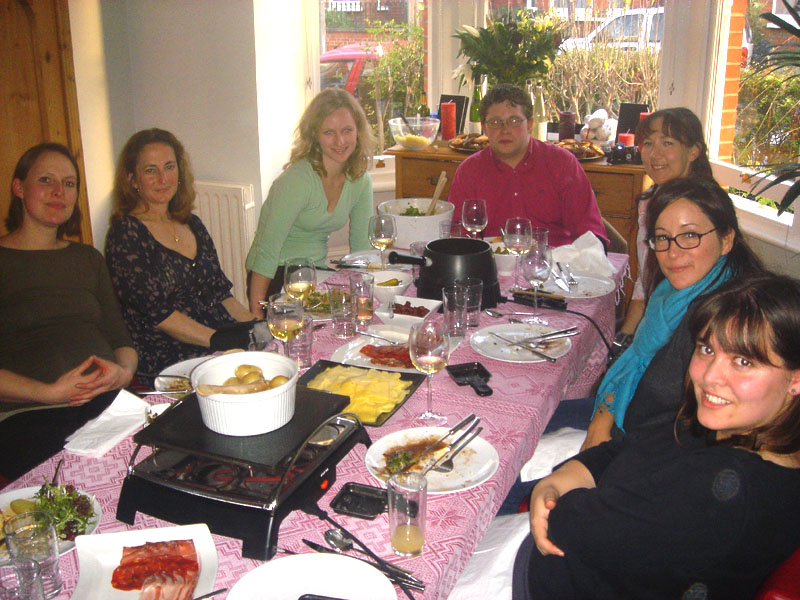
From left to right, we were Johanna the hostest with the mostest and the ever Passionate Cook, Sarah the fabulous non-blogger foodie, Laura the cheese from Chalk & Cheese, Bill who bakes well from Bill, please, Jeanne the canapé queen from Cook Sister!, Xochitl the maker of the best Mexican cookies this side of Mexico from Xochitl Cooks and finally, the affianced Jenni from Pertelote.


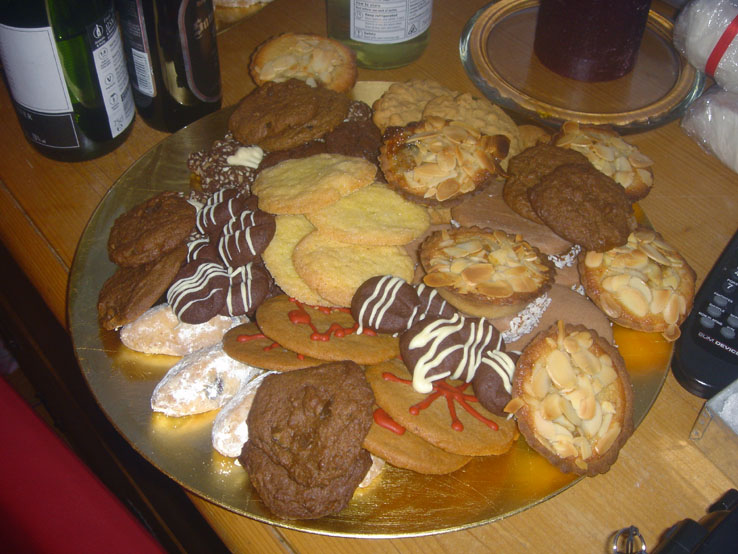
The delightful delicacies that were on offer.


... and finally because I had to take the picture of the above, here's one of me that I prepared earlier.


Sunday, December 10, 2006

In Preparation: The Pudding


I remember my mother, every Christmas, boiling a pudding in a cloth to take to our old fisherman neighbour. His wife refused to make one for him due to the length of time and hassle it took to cook. I understand what she feels.

One Christmas Dan and I made the same pudding about 10 times in two different batches to give away as gifts. The puddings had to be boiled for a good 5 hours and then hung up to dry before being re-wrapped, then kept for a further two months. On Christmas day the pudding then had to be reboiled for a further 2 or so hours before serving.

But there is something stoic about the Christmas pudding. Something in me tells me to hold up this tradition proudly and make each pudding with love and patience every year. My Granny sent me this recipe, made easier by steaming in a bowl which gives the pudding more of a lightness that the boiled pudding doesn't have. We give the pudding a grand send of by setting it aflame before taking it to the table.


Christmas Plum Pudding

250g currants
250g raisins
250g sultanas
60g almonds, chopped
60g cherries
120g mixed peel
1 lemon, zested and juiced
180g bread crumbs
90g flour
250g demerara sugar
250g suet
½ teaspoon freshly ground nutmeg
1 heaped teaspoon allspice
4 large eggs, beaten
¼ teaspoon baking soda
1 tablespoon milk
150ml brandy

In a large bowl soak the dried fruit and nuts with half the brandy overnight.

Next day combine all of the dry ingredients together with the lemon zest and juice. Make a well in the centre and add the eggs. Combine thoroughly. Dissolve the baking soda in the milk and add to the batter along with the rest of the brandy. Fold in the soaked fruit until evenly distributed throughout the batter.

In a large saucepan, place 3 ramekins or mugs facing up which will act as a stand. Fill the saucepan with water until the water is level with the top of the stands. Spoon the batter into a pudding dish. Cover the top with a round of baking paper, wrap the top with calico or a tea towel and secure with string. Lower the pudding onto the stands in saucepan. Cover with a secure fitting lid. Bring to the boil then simmer on a low heat for 5 hours. Check the water level at least once an hour and top up if required.

To store, remove the old paper and cover in new baking paper and wrap in a clean cloth. This will prevent mould. When ready to serve, steam for a further 2 hours or microwave on medium for 10 ? 15 minutes. Turn the pudding out onto a serving plate. Douse with brandy and light immediately before taking it to the table. Serve with either custard, brandy custard or brandy butter.

Search Daydream delicious...